Get Notified The Philosophy The Skin The Formula The Ingredients How to Use FAQ Transparency

All your skin needs in a single blend.

Sophisticated Formula.
Skincare Simplified.

Moisturizes, reduces wrinkles, fades dark spots, evens skin tone — gentle on sensitive skin and designed with an extensive nutrient profile for comprehensive nourishment. Powerful Ingredients. Principled Pricing. Transparent Sourcing. Twelve natural ingredients, no synthetic additives, free shipping on orders over $35 within the contiguous U.S. Formulated and produced in Grand Rapids, Michigan.

Launching July 2026

Get Notified The Philosophy

The Collection

Face & Body Balm

Free shipping on orders over $35 — contiguous U.S. only.

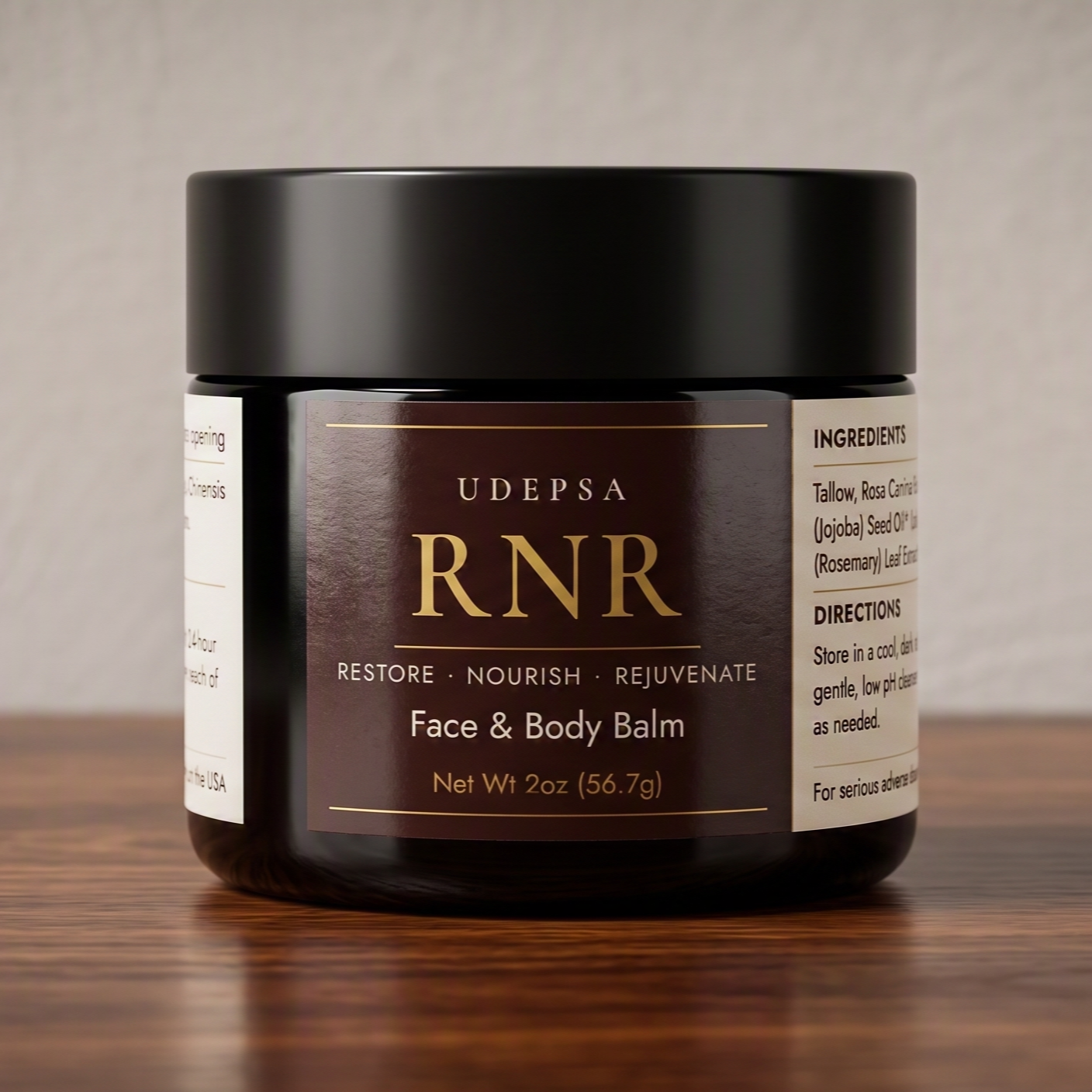
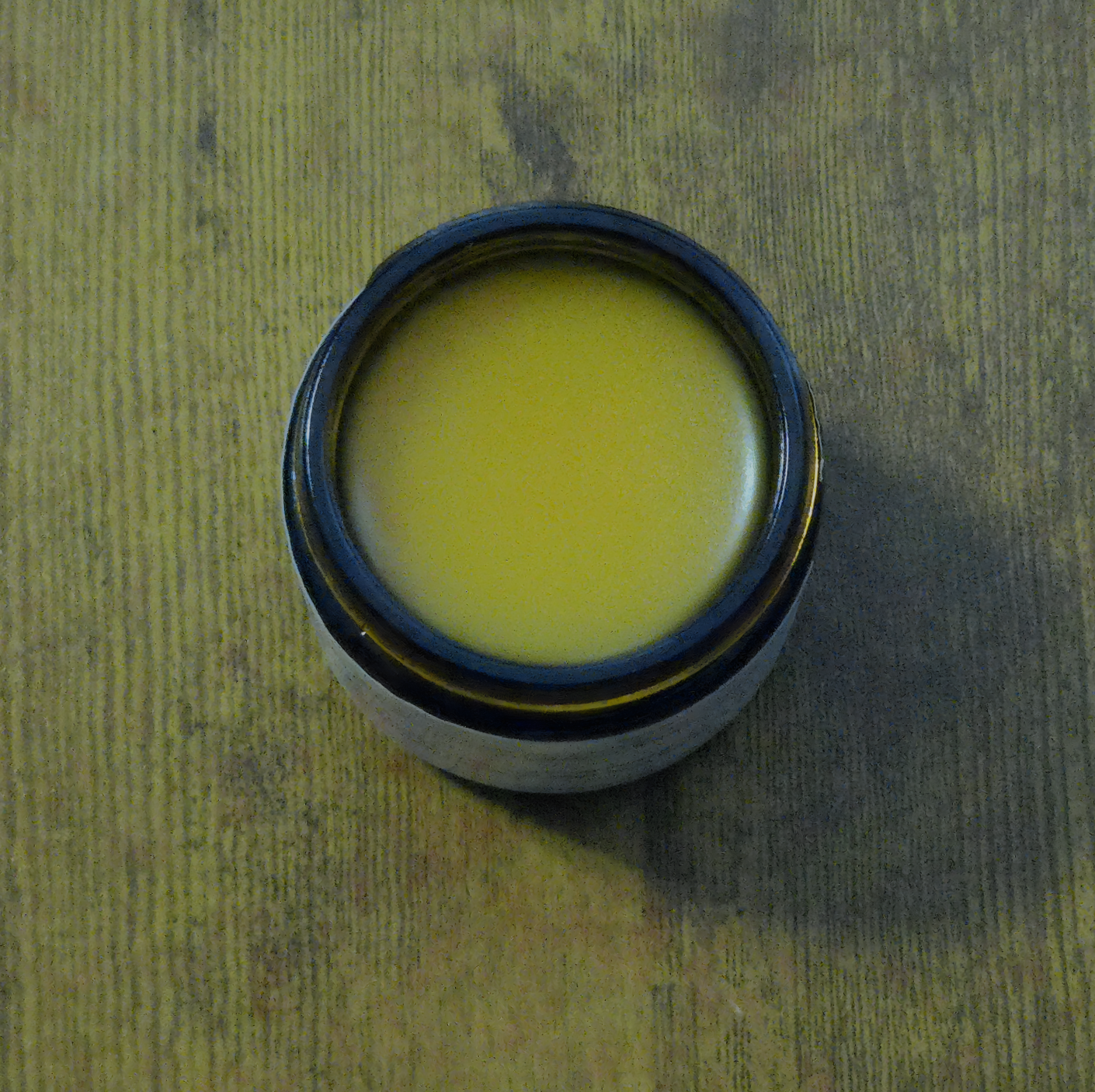
RNR Face & Body Balm — 2oz amber jar

2 oz  /  57 g

RNR Face & Body Balm

Elite-tier facial formula. Priced for the whole body. Twelve ingredients — no synthetic additives, fragrances, emulsifiers, or preservatives. Every gram is pulling its own weight.

Launching July 2026 — be the first to know when orders open.

Ships within 2–3 business days · Contiguous U.S. only · Free shipping over $35

No fancy boxes.
No influencer army.
Pay for the formula,
not the fad.

Formula First.

Udepsa's goal is to provide an absolutely top-tier skincare product at a fair price. We aim to sustain a profitable business by exchanging real value, instead of operating with the intent to extract as much money from our customers as possible. We don't feel the need to pay extra for custom branded boxes to create a luxurious facade or hire social media influencers for artificial hype. Our focus is formula first.

Celebrities and influencers, expensive packaging and unboxing theater, cherry-picked consumer results and legally questionable marketing claims all converge in order to convince you to pay massively inflated prices. So much energy goes into convincing the market of a product's premium price tag, but we aim to offer a product that sells itself. With a quality product and reasonable prices, we believe that loyal customers and sustainable profits are inevitable.

12 Total Ingredients
0 Synthetic Additives
100% Anhydrous Formula
Most tallow skincare brands Udepsa RNR
Price per oz $26–$98 $19
Free shipping $50–$100 threshold Orders over $35 (contiguous U.S.)
Sourcing documentation Not published Named suppliers, SDS, organic certifications
FDA-compliant claims Rarely Explicitly adhered to

The Skin

Your first
line of defense.

The Lipid Barrier and the Acid Mantle

Healthy skin is the result of two interdependent protective systems functioning correctly — the lipid barrier and the acid mantle. When both are working as they should, skin looks and feels healthy. When either is disrupted, the symptoms are familiar.

The Lipid Barrier

The outermost layer of the skin — the stratum corneum — is sometimes described as a brick and mortar structure. The bricks are flattened, keratinized skin cells called corneocytes. The mortar is a lamellar lipid matrix: thin sheets of lipids organized in precise repeating layers that fill the spaces between cells. This matrix is composed primarily of ceramides (~50%), cholesterol (~25%), and free fatty acids (~15%), with the remaining fraction made up of fatty alcohols, cholesterol sulfate, glucosylceramides, and other minor lipid classes.

The lipid barrier's primary function is to regulate transepidermal water loss — the passive evaporation of water from the skin's deeper layers to the surface and out into the environment. A well-functioning barrier slows this process significantly, maintaining the water content of the stratum corneum that gives skin its suppleness, elasticity, and healthy appearance. It also limits the penetration of environmental irritants, allergens, and pathogens into the deeper layers of the skin, and supports the regulated shedding of dead skin cells that keeps the surface smooth and even.

When the lipid barrier is compromised, the symptoms are familiar to anyone who has struggled with their skin: persistent dryness and tightness, flakiness and rough texture from impaired cell shedding, increased sensitivity and reactivity, redness, itchiness, a dull lackluster appearance, and — over time — accelerated visible aging as moisture loss depletes the plumpness and elasticity that healthy skin depends on. For many people, these symptoms are the reason they've cycled through product after product without resolution. Addressing the barrier itself, rather than masking its symptoms, is the more productive approach.

The barrier is not static — it is continuously synthesized and renewed by lipid-producing enzymes in the skin. The efficiency of those enzymes depends directly on the chemical environment they operate in. Which brings us to the acid mantle.

The Acid Mantle

The acid mantle is not a physical structure — it is a chemical environment. Specifically, it is the slightly acidic pH condition maintained at the skin's surface, typically between pH 4.5 and 5.5, created by the combined secretions of the sebaceous and eccrine glands and the metabolic activity of the skin's commensal microbiome.

This acidic environment serves several critical functions. It is inhospitable to many environmental pathogens and fungi (like S. aureus, associated with eczema; and Malassezia, associated with dandruff and seborrheic dermatitis). It regulates the protease enzymes that govern skin cell turnover, preventing both excessive shedding and the buildup of dead cells. And critically, it is the pH environment in which the enzymes responsible for synthesizing and organizing the lamellar lipid matrix function optimally. This environment is maintained by a combination of the skin's own secretions and the metabolic activity of commensal bacteria like Staphylococcus epidermidis, which produce acids and antimicrobial peptides that continuously reinforce skin's pH while suppressing opportunistic invaders.

When the acid mantle is disrupted, the consequences overlap significantly with those of a compromised lipid barrier — because in many cases, a disrupted acid mantle is the underlying cause of a compromised barrier. Breakouts occur as pathogenic bacteria proliferate more easily at higher pH. Sensitivity and reactivity increase as enzyme regulation falters and barrier lipid assembly is impaired. Uneven skin tone develops from disrupted cell turnover. Persistent dryness and irritation follow as downstream effects. Many people who bombard their skin with increasingly complex routines are inadvertently making the underlying problem worse while trying to treat the symptoms.

Why This Matters for Your Skincare Routine

The relationship between the two systems has direct implications for how you care for your skin. The lipid barrier cannot be properly assembled or maintained without the acidic conditions the acid mantle provides. When surface pH rises — through exposure to alkaline substances, harsh cleansers, or high-pH skincare products — barrier lipid synthesis is impaired at the enzymatic level, even when the raw lipid materials are present. The result is a barrier that becomes progressively less organized, less effective at retaining moisture, and more permeable to irritants.

Traditional soap has a pH of 8–10. Many conventional moisturizers and cleansers are formulated at pH 6–7. Each application transiently alkalinizes the skin's surface, impairing the acid mantle and the enzyme activity it supports. The skin does self-correct — typically within 30 minutes to several hours — but repeated daily disruption accumulates over time, and for sensitive or reactive skin the recovery window may not be sufficient.

The implications for product formulation and application are significant. A skincare product that introduces an alkaline water phase, synthetic emulsifiers, or high-pH preservative systems is working against the very systems it claims to support, regardless of what active ingredients it contains. Traditional soap or high-pH foaming cleansers disrupt the skin's natural pH environment at the very moment you want it primed for optimal absorption, undermining the foundation you're trying to support. For cleansing before application, a gentle, low-pH cleanser preserves what you're trying to protect. Recovery, when disruption stops, is slow by nature — rebalancing the microbiome, rebuilding the lipid barrier, and restoring acid mantle stability are biological processes that unfold over weeks, not days.
The Formula

Broad Spectrum Support.

Our goal with the RNR formula was to create a single product that can meet the skincare needs of any skin type. A lofty goal, but we'd rather come up short to a high bar than spare the effort to meet low standards.

Restore the skin's natural beauty.
Nourish with broad spectrum nutrients.
Rejuvenate with consistent use.

Part of restoring the skin's natural beauty is not making it worse. Even with all natural ingredients, if the formula itself is unbalanced and causes acne or irritation, the mission fails before it begins. You may be resorting to this kind of product because nothing else has worked. Our first priority is to not make your problems worse — or create new ones.

Skin Clarity

With a tallow-based product, there's always a concern that it will cause acne flare ups. That consideration was made during our formulation process. Black cumin seed oil, jojoba oil, and tea tree essential oil all have well-researched benefits for topical application, and one of the reasons they're included is to reduce the risk of our product causing acne. Additionally, every botanical ingredient in the formula scores low on the comedogenic scale.

Skin Sensitivity

The skin is a sensitive organ, especially on the face, and a product that won't itself inflame or cause irritation is essential. Black currant seed oil is included as one of the bulk ingredients for its high GLA content. Natural alpha-bisabolol, derived from the Candeia tree, is included at 1% for its well-documented skin-calming properties. Together, they contribute to a formula designed to be gentle on reactive and sensitive skin. There are also no synthetic preservatives, added fragrance, or emulsifiers — three of the most common sources of irritation in conventional skincare.

Wrinkles and Dark Spots

For visible improvement in the appearance of wrinkles and hyperpigmentation, the formula includes two well-researched actives. Rosehip seed oil is the formula's largest botanical component — second only to tallow in concentration — and has published human research supporting visible reduction in dark spots, fine lines, and uneven skin tone. Bakuchiol is included at 0.6% as a complementary active — the most rigorously studied botanical alternative to retinol, with published randomized controlled trials (using 0.5%) comparing it directly to retinol in human subjects, a standard of evidence rare for any plant-derived skincare ingredient, showing results matching those of retinol without the adverse side effects. For those who can't tolerate retinol, or who prefer to avoid it during pregnancy or breastfeeding, bakuchiol offers a well-researched alternative without the irritation profile retinol is known for.

Broad Spectrum Nutrients

Beyond compatibility, the formula is built to supplement possible skin deficiencies. The botanical oil stack — rosehip, black cumin, black currant, sea buckthorn, and jojoba — was selected for the breadth and complementarity of its fatty acid and nutrient profile. Rather than loading the formula with a single high-performing oil, each ingredient contributes something the others don't. The result is a broad spectrum of skin-compatible lipids, carotenoids, and plant actives working in concert.

Barrier Support

The fatty acid profile of this formula was built with barrier support in mind. Tallow's biocompatible lipid matrix integrates naturally with the skin's own surface lipids, contributing the same oleic, palmitic, and stearic acids that make up the barrier's free fatty acid fraction. Rosehip seed oil's high linoleic acid content supports the organized, fluid lipid architecture the barrier depends on — linoleic acid deficiency in the stratum corneum is associated with impaired barrier function regardless of how much other moisturization is present. Black currant seed oil's GLA and SDA fatty acids are well-researched for their direct integration into the stratum corneum. Beeswax forms a breathable external occlusive layer that slows transepidermal water loss while the barrier's own renewal process continues beneath it. Jojoba's wax ester structure integrates with the skin's surface lipid film and, at 10%, actively supports the delivery of the other barrier-building fatty acids into the stratum corneum. Alpha-bisabolol contributes a complementary delivery mechanism — it increases permeability to co-applied ingredients, supporting absorption of the botanical actives in the rest of the formula. Together, these ingredients work to support and reinforce the skin's natural protective surface from multiple angles simultaneously. The formula is also anhydrous — it has no measurable pH of its own and introduces no alkaline emulsifiers or synthetic preservative systems that would disturb the acid mantle on application.

Formula Stability

For stability, every jar is purged with inert gas before sealing. The unsaturated plant oils in this formula are oxidatively vulnerable — exposure to atmospheric oxygen degrades them over time. The inert gas purge, combined with rosemary antioxidant extract and vitamin E oil, forms an active preservation system that keeps the formula stable without synthetic preservatives. It's the kind of detail that doesn't show up in most brand marketing — but it's the kind of difference between a formula that works when you open the jar and one that's already degrading on the shelf.

The Ingredients — RNR Face & Body Balm

Every ingredient
earns its place.

01

Organic Grass-Fed & Finished Beef Suet Tallow (<36%)

Tallow

USDA Certified Organic, pasture raised, grass-fed and grass-finished suet tallow. The primary base of the formula. Rich in fat-soluble vitamins A, D, E, and K, with a fatty acid profile that closely mirrors your skin's own sebum, which is why it absorbs so naturally. Suet — rendered from kidney fat — produces a cleaner, less odorous tallow than other beef fat sources.

The Science ↗

02

Organic Rosehip Seed Oil

Rosa Canina Seed Oil

Our leading active oil. Cold-pressed from wild rose hips, high in linoleic acid and pro-vitamin A precursors. Supports skin regeneration and helps even tone over time.

The Science ↗

03

Organic Black Cumin Seed Oil

Nigella Sativa Seed Oil

The second-largest oil fraction in the formula. Pressed from Nigella sativa seeds, with one of the most substantial bodies of published human research behind it of any seed oil used in skincare. Its primary bioactive, thymoquinone, has attracted serious scientific attention across multiple fields.

The Science ↗

04

Black Currant Seed Oil

Ribes Nigrum Seed Oil

One of the few botanical oils that delivers both GLA (Omega-6) and stearidonic acid (Omega-3) simultaneously. A rare fatty acid profile that supports the skin's lipid barrier from two distinct metabolic pathways.

The Science ↗

05

Organic Jojoba Oil (10%)

Simmondsia Chinensis Seed Oil

Technically a liquid wax rather than a true oil — it absorbs cleanly and is shown to increase the permeation of co-applied ingredients by up to 40-fold. It's not simply a carrier, but an active participant in delivering the rest of the formula.

The Science ↗

06

Organic White Filtered Beeswax

Cera Alba

A structural ingredient that contributes to the balms semi-solid consistency at room temperature. Slows transepidermal water loss without occluding pores — and as a solid, passively limits atmospheric oxygen exposure to the formula's unsaturated oils between uses.

The Science ↗

07

Organic Sea Buckthorn Fruit Oil (1%)

Hippophae Rhamnoides Fruit Oil

One of the most compositionally complex botanical oils known — over 100 identified compounds including carotenoids, tocopherols, tocotrienols, plant sterols, and flavonoids. The fruit oil specifically, for its palmitoleic acid (Omega-7) density that the seed oil can't match.

The Science ↗

08

Natural Alpha-Bisabolol (1%)

Bisabolol

Derived from the Candeia tree, natural alpha-bisabolol has one of the longer safety and application track records of any botanical active in cosmetic science. Included at 1% for its well-documented skin-calming properties, and as a penetration enhancer that increases the skin's receptivity to the botanical actives around it.

The Science ↗

09

Bakuchiol (0.6%)

Bakuchiol

The most rigorously studied botanical alternative to retinol, with published randomized controlled trials comparing it directly to retinol in human subjects — a standard of evidence rare for any plant-derived skincare active.

The Science ↗

10

Organic Tea Tree Essential Oil (0.5%)

Melaleuca Alternifolia Leaf Oil

Standardized to terpinen-4-ol, its primary active compound. A deliberate concentration choice that sits below the sensitization threshold while contributing mildly clarifying and aromatic function consistent with the formula's design philosophy.

The Science ↗

11

Vitamin E Oil (0.5%)

Tocopherol

A natural mixed-tocopherol blend concentrated in the delta and gamma isomers. Like the rosemary extract, its primary function is formula stability — together these two form the preservation system that keeps everything else working.

The Science ↗

12

Rosemary Extract (0.2%)

Rosmarinus Officinalis Leaf Extract

A natural antioxidant stabilizer — not an active ingredient. Concentrated in carnosic acid and carnosol, its job is to protect the unsaturated plant oils from oxidative degradation over time, without synthetic preservatives.

The Science ↗

Application

How to use

01

Prep the Skin

For best results on the face, use only a low-pH (5.5 or lower), gentle cleanser to wash and then let it dry.

02

Apply

Scoop a small amount with your finger and spread evenly across the desired area. The balm responds immediately to skin contact and melts in. Your skin should feel smooth but not slippery — if it does, you've used a touch too much. Wipe any excess into the scalp and / or facial hair.

03

Use It Anywhere

For the body, apply as desired. Face, hands, elbows, cuticles — Udepsa is formulated to work wherever skin needs it.

Questions

Straight answers.

Where are your ingredients sourced?

From domestic suppliers with verifiable sourcing documentation. The botanical oils are sourced through established specialty ingredient suppliers and arrive with certificates of analysis and, where applicable, organic certification. Every ingredient in the formula has a paper trail — you can view and download available supplier documentation in the Transparency section below.

Why don't you talk about any medicinal effects of your product?

Although many competitors in this space market their products as beneficial for inflammation, acne, rashes, eczema, cuts, etc.; making 'treatment' or 'healing' type claims technically means they are selling it as an unapproved drug. Companies may only market products for medical use by registering it as a drug with FDA approval. Cosmetic skincare products are not allowed to make claims that it will treat or heal any disease or illness, be it a simple scrape or a pimple. Simply giving consumers the overall "impression" that the product is medicinal is out of bounds. Even providing "educational" material on clinical studies surrounding the ingredients in order to imply a medical application may veer into this territory. And yet you'll probably encounter more brands making legally questionable claims than those who are strictly compliant. As a cosmetic product seller, we are only allowed to claim that it will improve your appearance — "reduces the appearance of fine lines / wrinkles; improves skin tone" and statements like that are acceptable.

Once you buy our product, it's yours to use however you like; but we make no claim that it will treat any sort of ailment. Our claim is only this: use it consistently and your skin will look better.

Why tallow? Isn't that just beef fat?

It is — specifically, rendered fat from grass-fed, grass-finished, pasture raised cattle. We use suet tallow specifically, rendered from kidney fat, which produces a cleaner and less odorous product than tallow rendered from other beef fat sources. The reason it works so well in skincare comes down to biology: tallow's fatty acid profile is structurally close to the lipids that make up the human skin barrier. Oleic, palmitic, and stearic acids — the primary components of tallow — are the same fatty acids your skin produces naturally. Because of that compatibility, it melts on contact with skin temperature and absorbs rather than sitting on the surface the way many plant oils do.

The sourcing matters too — and "grass-fed" alone isn't the whole story. Many grass-fed cattle are transitioned to grain-based feedlots for the final stage of life. Grass-finished means the animal was raised on pasture through to slaughter. Compared to grain-fed or grain-finished tallow, grass-fed and grass-finished produces a measurably different fat composition — a more balanced omega-6 to omega-3 ratio and a higher concentration of conjugated linoleic acid (CLA). It's not a marketing distinction; it's a compositional one. The tallow in this formula carries USDA Organic certification, verified through Fatworks — sourcing documentation is available in the Transparency section.

Does tallow skincare smell?

Some do. Plain tallow rendered from general beef fat has a noticeable animal fat odor that some people find off-putting, particularly on the face.

RNR is different for two reasons. First, we use suet tallow specifically — rendered from kidney fat rather than mixed rendering stock. Suet produces a cleaner, less odorous tallow than most commercial alternatives. Second, the botanical oil profile in the formula — particularly the tea tree essential oil and rosemary extract — gives RNR a distinctly herbal character that displaces any animal fat scent.

Why don't you use Frankincense essential oil?

During our formula research, we found that frankincense essential oil doesn't contain the compounds frankincense is actually researched for.

The bioactive components with a meaningful published research base are boswellic acids — found in the resin. The problem is that boswellic acids have molecular weights above 470 daltons. Boswellic acids physically cannot carry over in the steam — they stay in the spent resin. Gas chromatography of commercial frankincense essential oils consistently returns zero detectable boswellic acids. This is a widespread inaccuracy in the natural skincare industry.

What you actually get in the bottle is primarily alpha-pinene and other monoterpenes — a pleasant scent with mild antioxidant activity. Not worthless. Just not what the research is about.

Why don't you publish all of your ingredient concentrations?

We publish the concentrations that are most meaningful to know — jojoba at 10%, which matches the research on its penetration-enhancing properties, and the lower-concentration ingredients like sea buckthorn fruit oil, bisabolol, bakuchiol, tea tree, rosemary extract, and vitamin E, where the specific dose is relevant to understanding what the formula is doing. We keep a few of the bulk ingredient concentrations confidential so that our exact formula can't be easily replicated. That said, we do publish that tallow leads the formula at <36%, so a knowledgeable buyer can reasonably infer that the remaining undisclosed ingredients are present in substantial amounts.

When will my order ship?

Orders are processed and shipped within 2–3 business days of receipt. You'll receive a shipping confirmation with tracking information once your order is on its way. We ship to the contiguous United States only.

Sourcing Documentation

The paper trail.

Every ingredient in the RNR formula is sourced with documentation. Below you'll find the available Safety Data Sheets (SDS) and organic certifications from our suppliers.

Ingredient Supplier SDS Organic Cert
Organic Grass-Fed & Finished Beef Suet Tallow Fatworks Download Download
Organic Rosehip Seed Oil New Directions Aromatics Download Download
Organic Black Cumin Seed Oil New Directions Aromatics Download Download
Black Currant Seed Oil New Directions Aromatics Download
Organic Jojoba Oil Jedwards International Download Download
Organic White Filtered Beeswax Jedwards International Download Download
Organic Sea Buckthorn Fruit Oil Jedwards International Download Download
Natural Alpha-Bisabolol Shay & Company Download
Bakuchiol New Directions Aromatics Download
Organic Tea Tree Essential Oil Jedwards International Download Download
Vitamin E Oil Jedwards International Download
Rosemary Antioxidant Extract New Directions Aromatics Download